
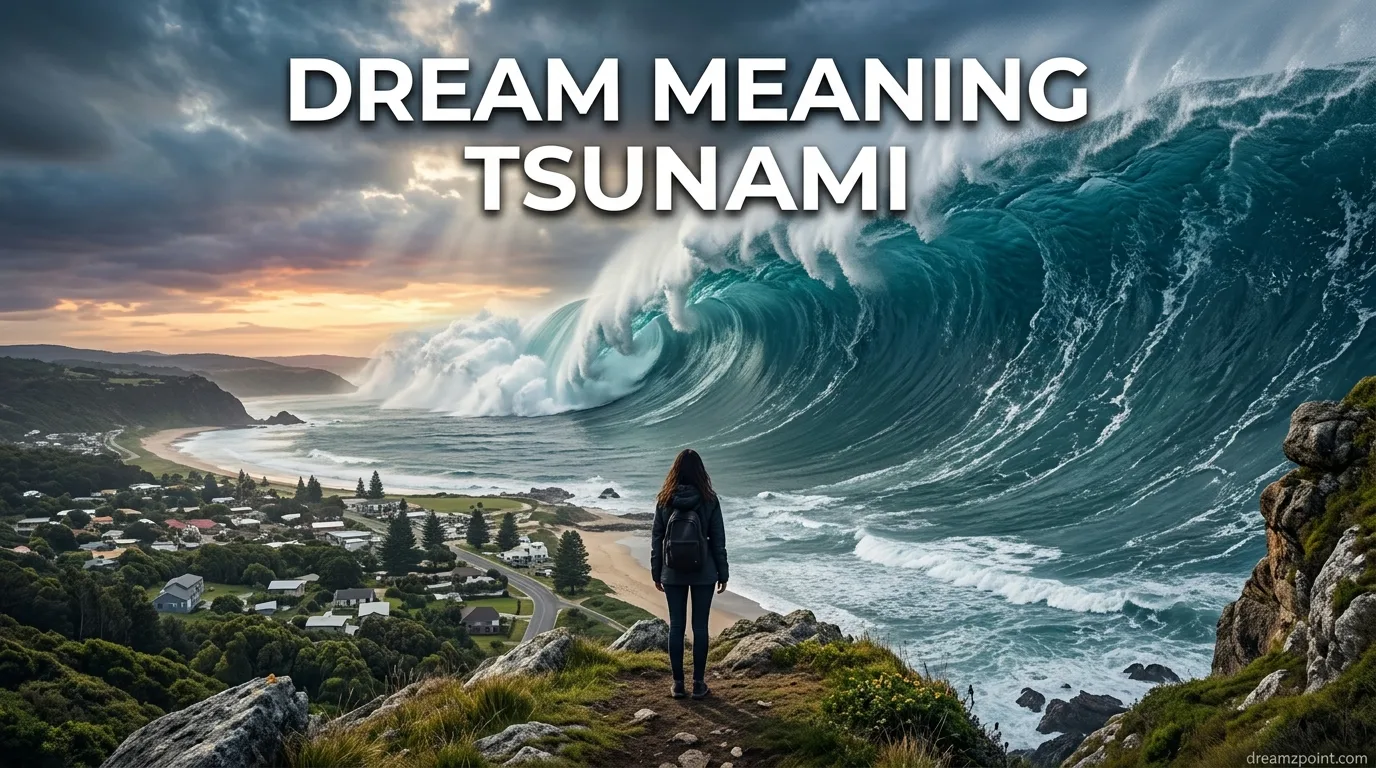
You’re standing on a quiet shoreline. The air feels oddly still, almost heavy, as if the world is holding its breath. Suddenly, the ocean begins to retreat unnaturally fast revealing the seabed beneath your feet.
Before you can process what’s happening, a towering wall of water rises in the distance, racing toward you with unstoppable force. You try to run, but your legs feel heavy, your breath shallow. Just as the wave crashes down, you wake up heart pounding, mind racing.
Dreams like these linger. They don’t just fade away with the morning light; they follow you, leaving behind questions, emotions, and sometimes unease.
Tsunami dreams are among the most powerful and intense dream experiences people report, often filled with fear, urgency, and overwhelming energy.
But what do they really mean?
In 2026, as emotional awareness and self-reflection become increasingly valued, understanding dream symbolism has taken on new importance. Tsunami dreams are not random they often carry messages about inner turmoil, transformation, or emotional overload.
This article explores these meanings deeply, helping you decode what your mind might be trying to tell you and how to apply those insights to your waking life.
Understanding the Symbolism of a Tsunami in Dreams
A tsunami in dreams is rarely about literal water. Instead, it represents overwhelming emotional forces, sudden change, or situations that feel beyond your control. Unlike calm ocean dreams, a tsunami is abrupt, powerful, and disruptive.
Think of it as a metaphor for emotional intensity. Just as a tsunami can reshape landscapes, these dreams often reflect moments in life that threaten to reshape your identity, relationships, or direction.
The symbolism becomes clearer when you consider the nature of water in dreams. Water often represents emotions fluid, deep, and sometimes unpredictable. When that water becomes a tsunami, it suggests those emotions are no longer manageable in their current form.
For example, someone facing mounting stress at work or unresolved personal conflict might dream of a tsunami approaching. The wave becomes a visual representation of everything building beneath the surface.
These dreams often arise during times of transition or pressure. They don’t necessarily predict disaster but highlight the emotional weight you’re carrying. In many ways, they serve as a signal your subconscious urging you to pay attention before something internal becomes overwhelming.
Understanding this symbolism is the first step in transforming fear into insight.
Why Tsunami Dreams Feel So Real and Intense

Tsunami dreams are often vivid, detailed, and emotionally charged. You might remember the sound of rushing water, the panic in your chest, or the desperate need to escape. This realism is not accidental.
The brain processes emotions during sleep, especially during REM cycles. When emotions are intense or unresolved, the brain translates them into equally intense imagery. A tsunami is one of the most dramatic ways your mind can express urgency.
The sensory detail plays a role too. Your mind constructs scenarios that feel real to ensure the message isn’t ignored. The louder and more dramatic the dream, the more likely you are to remember it.
There’s also a survival instinct element. Dreams involving danger trigger deep-rooted responses, making them more memorable. A tsunami taps into primal fears loss of control, destruction, and vulnerability.
But intensity doesn’t always mean something negative is about to happen. It often means something important is happening internally. Your mind is amplifying the message so you don’t overlook it.
These dreams act like emotional alarms loud, impossible to ignore, and designed to prompt reflection.
Emotional Overload: The Core Meaning Behind Tsunami Dreams
At their core, tsunami dreams often symbolize emotional overload. This can stem from stress, anxiety, grief, or even suppressed feelings that have been building over time.
Imagine carrying small worries every day work deadlines, relationship tensions, financial concerns. Individually, they seem manageable. But over time, they accumulate, much like water gathering force beneath the ocean surface.
Eventually, something triggers release and that’s when the tsunami appears in your dreams.
Signs of Emotional Overload in Dreams
- Feeling chased or unable to escape the wave
- Experiencing panic or helplessness
- Watching destruction unfold around you
- Repeated dreams of rising water
These patterns suggest that your emotional capacity is being stretched beyond comfort.
What Your Mind Is Trying to Tell You
Your subconscious may be urging you to pause and reassess. Are you taking on too much? Are you avoiding difficult conversations? Are you suppressing emotions instead of processing them?
Tsunami dreams are not just warnings they are invitations to reconnect with your emotional state and find healthier ways to cope.
The Role of Sudden Change and Life Transitions

Tsunamis are sudden and transformative, making them powerful symbols of life transitions. These dreams often appear during moments when your life is shifting sometimes unexpectedly.
This could include:
- Starting a new job
- Ending or beginning a relationship
- Moving to a new place
- Experiencing a major personal realization
The wave represents the unknown. It’s not just the change itself, but the speed and scale at which it’s happening.
In real life, transitions can feel overwhelming even when they’re positive. A promotion, for instance, might bring excitement but also pressure and uncertainty. Your dream translates this complexity into a single, powerful image.
These dreams can also reflect resistance. If you’re struggling to adapt or accept change, the tsunami may symbolize your fear of being swept away by circumstances.
Rather than resisting the wave, these dreams often encourage acceptance and adaptation learning to navigate change rather than avoid it.
Fear of Losing Control: A Hidden Theme
One of the most common emotional threads in tsunami dreams is the fear of losing control. The sheer force of a tsunami makes it impossible to stop, mirroring situations where you feel powerless.
This might relate to:
- Workplace pressures beyond your influence
- Family dynamics you can’t fix
- Unexpected life events
- Internal struggles like anxiety or self-doubt
In the dream, you may try to run, hide, or find safety but the wave keeps coming. This reflects your waking-life attempts to manage situations that feel uncontrollable.
Interestingly, the dream doesn’t always mean you are actually out of control. It often reflects your perception of control. Sometimes, the fear itself is more overwhelming than the reality.
Recognizing this distinction can be empowering. It shifts your focus from trying to control everything to managing your response.
Tsunami dreams remind you that while you can’t control every wave, you can learn how to navigate them.
Different Tsunami Dream Scenarios and Their Meanings

Not all tsunami dreams are the same. The details matter, and each variation can reveal different aspects of your emotional state.
Running Away from a Tsunami
This often indicates avoidance. You might be trying to escape a situation or emotion rather than confronting it.
Surviving the Wave
Survival suggests resilience. Despite challenges, you have the inner strength to endure and adapt.
Watching from a Distance
If you’re observing rather than experiencing the wave, it may mean you’re emotionally detached or processing something from a safe distance.
Being Swept Away
This scenario reflects feeling overwhelmed or consumed by circumstances. It may signal a need for support or change.
Each variation offers clues. Paying attention to your role in the dream active or passive can help you understand how you’re التعاملing with real-life challenges.
The Connection Between Stress and Tsunami Dreams
Stress is one of the strongest triggers for tsunami dreams. When your mind is overloaded, it seeks ways to release pressure and dreams become the outlet.
Modern life often involves constant stimulation and responsibility. Without proper emotional processing, stress builds quietly until it demands attention.
Tsunami dreams can appear after particularly stressful days or during prolonged periods of pressure. They act as a release valve, allowing your mind to process what you haven’t addressed consciously.
The intensity of the wave often mirrors the intensity of your stress. A massive, destructive tsunami may indicate high levels of tension, while smaller waves might reflect manageable stress.
These dreams are not just reflections they’re signals. They highlight the importance of rest, boundaries, and emotional awareness.
Ignoring them doesn’t make the stress disappear. Understanding them, however, can lead to meaningful change.
Are Tsunami Dreams Always Negative?

Despite their frightening nature, tsunami dreams are not inherently negative. In fact, they can carry powerful messages of growth and transformation.
Destruction in dreams often symbolizes clearing away the old to make space for the new. A tsunami may represent a necessary emotional release or a turning point in your life.
For instance, someone leaving a toxic environment might dream of a tsunami destroying familiar surroundings. While unsettling, the dream reflects liberation and renewal.
The key lies in interpretation. Instead of focusing solely on fear, consider what the wave is changing or revealing.
Sometimes, these dreams signal that you’re ready to face something you’ve been avoiding. They can mark the beginning of healing, self-awareness, or personal evolution.
In this way, tsunami dreams are not just warnings they are catalysts.
Cultural and Psychological Perspectives
Different cultures and psychological frameworks offer unique interpretations of tsunami dreams.
In some traditions, water is seen as a symbol of spiritual cleansing. A tsunami, then, represents a powerful purification process washing away negativity or past burdens.
From a psychological perspective, especially in modern dream analysis, tsunami dreams are linked to subconscious processing. They reflect internal states rather than external predictions.
Both perspectives share a common theme: transformation. Whether spiritual or psychological, the wave represents change and renewal.
Understanding these perspectives can deepen your interpretation. It allows you to see your dream not just as a reaction, but as part of a broader inner journey.
How Your Personal Life Context Shapes the Meaning

No two tsunami dreams are exactly alike because no two lives are the same. Your personal experiences, emotions, and circumstances play a crucial role in shaping the meaning.
For example:
- A student facing exams might dream of a tsunami representing academic pressure
- A parent dealing with family challenges may interpret the wave as emotional responsibility
- Someone going through a breakup might see it as overwhelming grief
Context is everything. The same symbol can mean different things depending on your situation.
To understand your dream, ask yourself:
- What am I currently dealing with?
- What emotions have I been avoiding?
- What feels overwhelming in my life right now?
These questions help connect the dream to your reality, making the interpretation more meaningful and accurate.
Practical Steps to Respond to Tsunami Dreams
Understanding your dream is only the first step. The real value comes from how you respond to it.
Reflect and Journal
Write down your dream as soon as you wake up. Include details, emotions, and any patterns you notice over time.
Identify Emotional Triggers
Look for connections between your dream and your waking life. What might be causing the “wave”?
Take Small, Manageable Actions
If your dream highlights overwhelm, break tasks into smaller steps. Regaining a sense of control can reduce emotional pressure.
Practice Emotional Release
Talk to someone, engage in creative expression, or simply allow yourself to feel. Suppressed emotions often fuel these dreams.
These steps transform the dream from a source of fear into a tool for self-awareness and growth.
Common Misinterpretations to Avoid

It’s easy to misunderstand tsunami dreams, especially given their dramatic nature.
One common mistake is assuming they predict real disasters. While they can feel prophetic, they are symbolic rather than literal.
Another misconception is viewing them as purely negative. As discussed, they often signal growth, change, or emotional release.
Some people also dismiss them entirely, ignoring their emotional significance. This can lead to missed opportunities for self-reflection.
Avoiding these misinterpretations allows you to approach your dreams with curiosity rather than fear.
Lessons Tsunami Dreams Can Teach You
At their deepest level, tsunami dreams offer valuable life lessons.
They teach you to listen to your emotions before they become overwhelming. They remind you of your resilience the ability to survive even the most powerful waves.
They also highlight the importance of adaptability. Life is unpredictable, and these dreams encourage you to develop flexibility and inner strength.
Perhaps most importantly, they invite you to face what you’ve been avoiding. The wave may be intimidating, but it often carries the truth you need to confront.
In this way, tsunami dreams become guides rather than threats.
FAQs
1. What does it mean if I keep dreaming about tsunamis?
Recurring tsunami dreams often indicate ongoing emotional stress or unresolved issues that need attention.
2. Are tsunami dreams a bad omen?
No, they are symbolic rather than predictive. They reflect internal states, not future disasters.
3. Why do I feel so scared after these dreams?
The intensity of the imagery triggers strong emotional responses, making the experience feel real and alarming.
4. What if I survive the tsunami in my dream?
This usually symbolizes resilience and your ability to overcome challenges.
5. Can positive changes cause tsunami dreams?
Yes, even positive transitions can feel overwhelming, triggering such dreams.
6. Should I be worried about these dreams?
Not necessarily. They are signals, not threats. Understanding them can actually be beneficial.
7. How can I stop having tsunami dreams?
Addressing stress, processing emotions, and improving sleep habits can reduce their frequency.
Conclusion
Tsunami dreams may arrive with force, urgency, and fear but beneath their intensity lies meaning. They are reflections of your inner world, shaped by emotions, experiences, and transitions that demand attention.
Rather than fearing the wave, consider what it reveals. Are you overwhelmed? Facing change? Avoiding something important?
These dreams are not here to frighten you they are here to guide you. They encourage awareness, resilience, and growth, offering a deeper understanding of yourself.
When you learn to listen, even the most powerful wave can become a source of clarity rather than chaos.
