
Have you ever woken up shaken by a dream so vivid it lingers long after your eyes open? Maybe you felt the heavy, silent presence of a crocodile lurking in deep water, watching from the shadows. You knew it was there, even if you couldn’t see it clearly. That quiet fear, that heavy awareness, mirrors what grief can feel like: unseen yet always present.
Dreams about crocodiles often surface during periods of loss, emotional vulnerability, or unresolved grief. When they appear, they don’t just create fear. They reflect old wounds that still live beneath the surface. These dreams can be unsettling, but they are also invitations. They urge us to confront what we’ve avoided and to begin healing from emotional injuries that time alone hasn’t resolved.
This article explores what crocodile dreams mean after loss, how they connect to emotional wounds, and how understanding them can guide you toward deeper healing. Let’s explore what these dreams may be trying to tell you.
Understanding the Symbolism of Crocodiles in Dreams
Crocodiles are ancient, powerful, and primal creatures. In dreams, they often symbolize hidden emotions, survival instincts, and subconscious fears. They live in water, which commonly represents emotions, and their stealth suggests that something is lurking beneath the surface of your awareness.
When someone has experienced loss, the subconscious mind often stores pain that hasn’t yet been processed. The crocodile becomes a representation of that hidden pain. It doesn’t attack openly. It waits, observes, and surfaces only when the moment is right. This mirrors how grief can linger quietly until a memory, smell, or thought pulls it back into awareness.
Crocodiles also symbolize endurance. They have existed for millions of years, adapting and surviving. In this way, the crocodile can represent your ability to survive emotional hardship, even if you don’t yet recognize your strength.
Understanding this dual symbolism—danger and resilience—is key. A crocodile dream is not just a warning. It’s also a reminder that your capacity to survive is far stronger than your fear.
Why Crocodile Dreams Often Appear After Loss

Grief rarely moves in a straight line. Instead, it surfaces unexpectedly. After a loss, your mind works overtime to process shock, sorrow, and unanswered questions. Sometimes the emotions are too heavy to face while awake. When that happens, the subconscious speaks through dreams.
Suppressed Grief Finding Its Voice
When you try to “stay strong” or push through loss too quickly, emotions don’t disappear. They hide. A crocodile in your dream may represent those buried feelings resurfacing, demanding attention. It’s a signal that the pain still needs space to breathe.
Fear of Being Overwhelmed
Loss can make the world feel unstable. A lurking crocodile symbolizes the fear that your emotions might overpower you. You may feel like one wrong step will plunge you into a flood of grief. The dream reflects that fear.
The Need to Reclaim Control
Sometimes these dreams appear when life feels unpredictable after loss. The crocodile symbolizes uncertainty and danger, but facing it in a dream hints at your inner desire to regain control and emotional balance.
The Crocodile as a Metaphor for Old Emotional Wounds
Old wounds rarely disappear on their own. They sink deep into memory and shape behavior in quiet ways. The crocodile is an ideal symbol for this hidden pain.
Like a crocodile beneath murky water, emotional wounds often hide from conscious awareness. You might think you’ve moved on, only to find that a small trigger pulls you back into pain. A scent, a photograph, a phrase, or even silence can stir buried memories.
These wounds may not always be tied to a single event. Sometimes they are layered: childhood grief, betrayal, abandonment, or unresolved guilt. The crocodile doesn’t discriminate. It embodies any pain that still holds power over you.
But there is also hope in this metaphor. Crocodiles are not mindless monsters. They are strategic, patient, and purposeful. When they appear in dreams, they challenge you to acknowledge the wound so that healing can begin.
Facing the Crocodile: What Confrontation Means
A recurring theme in these dreams is confrontation. Whether you run from the crocodile or face it can reveal a lot about your healing journey.
Running Away from the Crocodile
If you are fleeing, it suggests avoidance. You may be overwhelmed by memories or afraid of confronting deep grief. This isn’t weakness. It’s a protective instinct. The mind sometimes delays healing until you feel ready.
Watching the Crocodile from a Distance
Observing without engaging may reflect cautious awareness. You recognize the pain but aren’t ready to engage with it fully. This can be a transitional phase, a step between denial and confrontation.
Facing or Fighting the Crocodile
Facing the crocodile represents readiness to heal. You may be confronting grief, starting therapy, or acknowledging difficult truths. This is a powerful sign of emotional progress.
Water in Crocodile Dreams: The Emotional Landscape
Water plays a critical role in these dreams. The condition of the water reflects your emotional state.
Calm Water
If the water is calm, you may be processing grief in a balanced way. You feel sadness but also control.
Murky or Dark Water
Cloudy water suggests confusion or emotional overwhelm. The pain exists, but clarity is lacking. You may be struggling to understand or accept your emotions.
Flooded Water or Waves
Rising water symbolizes emotional intensity. Grief may feel like it’s growing, spilling over, or impossible to contain. This can happen during anniversaries, life changes, or major reminders of loss.
Common Types of Crocodile Dreams and Their Meanings
Different scenarios in crocodile dreams offer different insights into your healing process.
Being Chased by a Crocodile
This indicates that you’re trying to escape painful memories. The more you avoid them, the more persistent they become.
Being Attacked
An attack may symbolize sudden emotional breakdowns or overwhelming grief that feels out of control. It doesn’t mean failure; it means the pain needs attention.
Taming or Calming the Crocodile
If you calm or control the crocodile, it suggests progress. You’re learning to manage emotions instead of being controlled by them.
Seeing a Crocodile at Rest
A calm crocodile may symbolize grief that exists but no longer dominates you. The wound is present but not destructive.
The Emotional Cycle of Healing After Loss
Healing doesn’t follow a strict timeline. It moves in cycles.
Initial Shock
Immediately after loss, emotions may feel numb. Dreams might not appear yet because the mind is still absorbing the impact.
Emergence of Pain
As reality settles in, dreams become more vivid. Crocodile dreams often begin here, reflecting buried emotions.
Confrontation
This is the phase where you begin to face your grief. The crocodile becomes more visible or aggressive in dreams, mirroring your emotional confrontation.
Integration and Growth
Over time, the crocodile may appear calmer. You’re not erasing the pain; you’re learning to live with it in a healthier way.
How Personal Experiences Shape Dream Meaning

Not everyone interprets crocodiles the same way. Your cultural background, past experiences, and personal associations influence the meaning.
For someone who fears water, the crocodile may symbolize panic. For someone fascinated by wildlife, it might symbolize power. The key is to consider your personal emotions tied to the creature.
Ask yourself:
- What feelings does the crocodile evoke?
- What is happening in your waking life?
- Does the dream remind you of a specific memory?
Understanding personal context makes dream interpretation far more accurate.
When Crocodile Dreams Signal Unresolved Grief
If these dreams repeat, it may signal unresolved grief. You may still be carrying guilt, regret, or unanswered questions about the loss.
Unresolved grief often shows up in patterns such as:
- Difficulty trusting others
- Emotional numbness
- Persistent guilt
- Fear of new loss
Dreams don’t create these issues, but they highlight them. Think of the dream as a messenger urging you to process emotions you may have been avoiding.
Turning Fear into a Tool for Healing
Fear in dreams is uncomfortable, but it can also be a powerful tool for growth.
Use the Fear as Information
Instead of avoiding the dream, reflect on it. Ask what the crocodile might represent. What feelings surface when you think about the dream?
Journal After Waking
Write down details: colors, emotions, location, actions. Over time, patterns may emerge that reveal hidden concerns.
Connect the Dream to Your Life
Look at your waking life. Are there unresolved conversations, regrets, or emotional burdens you’ve been avoiding? The dream may be pointing you toward them.
Practical Steps to Support Emotional Healing
Healing requires action, not just awareness.
Talk About Your Experience
Sharing your feelings with a trusted friend or counselor can ease emotional weight. Silence keeps pain hidden.
Allow Yourself to Feel
Suppressing emotions prolongs healing. Allow grief to surface without judging yourself.
Create New Rituals
Honoring memories through rituals, art, or reflection can transform pain into meaningful remembrance.
Seek Support When Needed
If grief feels overwhelming, professional guidance can help you process complex emotions safely.
Reframing the Crocodile: From Threat to Teacher
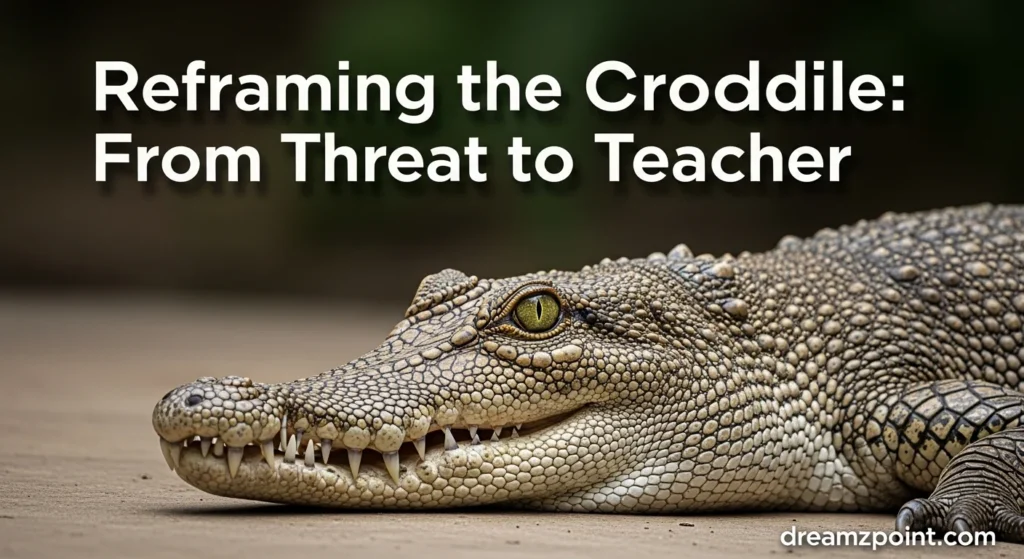
It’s natural to see the crocodile as a threat. But what if you viewed it as a teacher?
The crocodile reveals hidden wounds. It forces you to confront pain that you might otherwise ignore. Without that confrontation, healing stalls. By acknowledging the crocodile instead of fearing it, you gain power over your emotional landscape.
In time, the crocodile may no longer symbolize fear. It may represent resilience, survival, and growth.
Common Misunderstandings About Crocodile Dreams
People often assume these dreams predict danger or misfortune. That’s rarely the case.
Crocodile dreams aren’t predictions. They are reflections of your emotional state. They don’t mean something bad will happen. Instead, they signal unresolved feelings or hidden fears.
Another misconception is that recurring dreams mean something is wrong with you. In reality, they simply show that your mind is still working through unresolved material.
Dreams are not judgments. They are messages.
FAQs
Why do crocodiles appear in my dreams after someone dies?
They often symbolize suppressed grief or unresolved emotions connected to the loss.
Do crocodile dreams mean danger?
Not usually. They more often reflect internal emotional struggles rather than external threats.
What does it mean if the crocodile is chasing me?
It may indicate that you are avoiding painful emotions or memories.
Why do these dreams repeat?
Recurring dreams often signal that a deeper emotional issue needs attention.
Can these dreams help me heal?
Yes. Understanding their meaning can guide emotional processing and healing.
What if I’m not afraid of the crocodile in the dream?
That can suggest growing acceptance or progress in emotional healing.
Should I worry if the crocodile attacks me?
No. An attack can represent emotional overwhelm, not a literal danger.
Can I stop having these dreams?
As you process grief and emotions, these dreams often lessen naturally.
Conclusion
Crocodile dreams after loss are powerful reflections of inner healing. They reveal what still lingers beneath the surface: grief, fear, unresolved pain, and the quiet strength that carries you forward. Instead of seeing these dreams as threats, view them as invitations to understand yourself more deeply.
By facing the crocodile rather than running from it, you begin the process of healing old emotional wounds. With time, awareness, and gentle self-compassion, what once felt overwhelming can transform into wisdom, resilience, and a renewed sense of inner balance.
