
It’s late at night. You’re walking through a dimly lit hallway, the air heavy with silence, when suddenly a bat darts past your face. Its wings brush against you, sending a chill down your spine.
You wake up, heart racing, unsure whether to feel fear, confusion, or something deeper you can’t quite name. Why a bat? Why now?
Dreams have a way of surfacing what we often push aside during waking hours. When bats appear in dreams, they can feel unsettling, mysterious, even ominous.
Yet beneath that eerie symbolism often lies something deeply human unprocessed grief, hidden fears, or emotional wounds we haven’t fully acknowledged.
Understanding these dreams matters because they offer a rare glimpse into the subconscious. They can reveal emotions we’ve buried, experiences we’ve minimized, or losses we’ve never fully mourned.
By exploring what bat dreams might represent, we gain not just insight but an opportunity for healing, clarity, and emotional growth.
The Symbolism of Bats in Dreams
Bats have long been associated with darkness, mystery, and transformation. In many cultures, they symbolize the unseen the parts of life that exist just beyond our awareness. When they appear in dreams, they often act as messengers from the subconscious.
Unlike birds that soar in daylight, bats navigate through darkness using echolocation. This unique trait makes them powerful symbols of intuition and hidden perception. Dreaming of a bat may suggest that you’re sensing something beneath the surface of your life something not yet fully understood.
But bats aren’t just symbols of fear or darkness. They also represent rebirth. In some traditions, bats signify the end of one phase and the beginning of another. This dual nature both unsettling and transformative makes them especially significant in dreams tied to emotional processing.
When linked to grief or trauma, the bat may represent something unresolved that continues to “hover” in your mind. It doesn’t necessarily mean danger; rather, it signals something asking to be acknowledged.
Why Grief and Trauma Appear in Dreams

Grief and trauma rarely disappear just because we stop thinking about them. Instead, they often settle into the subconscious, waiting for a moment to surface. Dreams provide a safe space for these emotions to emerge.
During sleep, the mind processes experiences and emotions that were too overwhelming during the day. If grief or trauma hasn’t been fully processed, it may appear symbolically through images like bats.
A bat’s sudden, unpredictable movement can mirror how unresolved emotions behave. They don’t always show up in obvious ways. Instead, they appear unexpectedly, often triggered by unrelated events.
For example, someone who lost a loved one years ago might suddenly dream of bats after hearing a familiar song or visiting a meaningful place. The dream isn’t random it’s the mind revisiting something unfinished.
These dreams are not signs of weakness. They’re signs that the mind is still working toward healing.
The Emotional Tone of Bat Dreams
The meaning of a bat dream often depends less on the bat itself and more on how you feel during the dream.
Were you terrified? Calm? Curious? The emotional tone offers important clues about what the dream represents.
Fear and Panic
If the bat causes fear, it may reflect anxiety about confronting painful memories. The bat becomes a symbol of avoidance something you’re not ready to face.
Calm Observation
If you observe the bat without fear, it may indicate that you’re beginning to process past emotions. You’re no longer overwhelmed you’re aware.
Confusion or Disorientation
Feeling lost or confused in the presence of a bat can suggest unresolved emotional complexity. You may sense that something is wrong but struggle to identify it clearly.
Understanding your emotional response helps decode the deeper message of the dream.
Bats as Symbols of Unacknowledged Loss
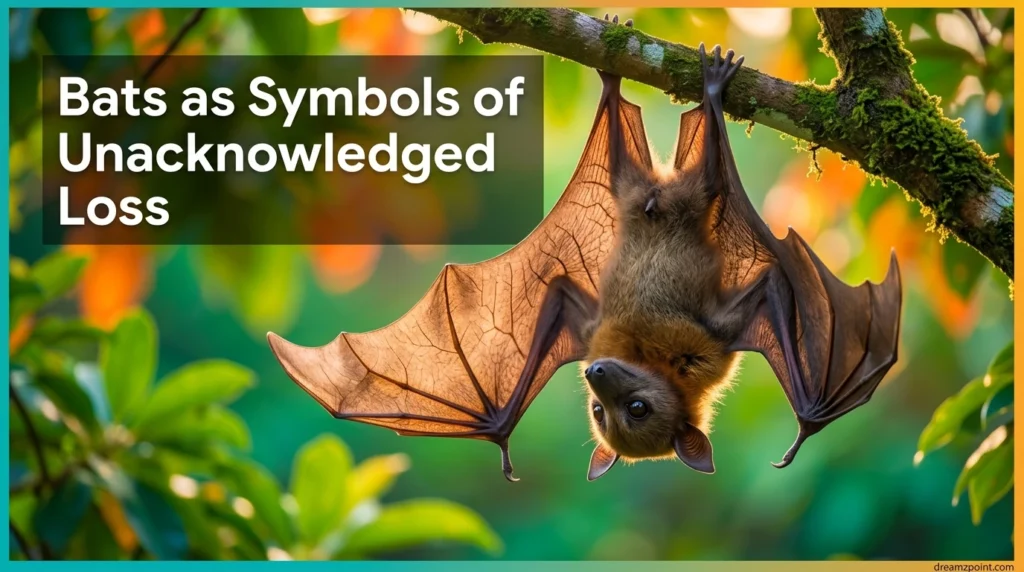
Grief doesn’t always come from obvious loss. Sometimes it stems from things we never fully recognized missed opportunities, broken relationships, or unfulfilled expectations.
A bat in a dream may represent this kind of hidden grief. It appears in darkness because the loss itself hasn’t been fully brought into awareness.
For instance, someone who moved away from home might dream of bats years later not because of fear, but because of a lingering sense of disconnection or nostalgia they never processed.
These dreams gently push us to acknowledge what we’ve lost, even if it doesn’t seem significant on the surface.
Grief, when ignored, doesn’t disappear it transforms into something harder to understand. The bat becomes a symbol of that transformation.
The Connection Between Trauma and Night Imagery
Trauma often manifests through intense, vivid dreams. The mind uses imagery to express what words cannot.
Bats, with their erratic flight and association with darkness, can mirror the fragmented nature of traumatic memories. They appear suddenly, without warning, much like intrusive thoughts.
In trauma-related dreams, the bat may not act alone. It might appear in chaotic environments dark forests, abandoned buildings, or confined spaces. These settings reflect the emotional landscape of the dreamer.
The unpredictability of the bat’s movement can represent a lack of control something commonly experienced in trauma.
Recognizing this connection can help individuals approach these dreams with curiosity rather than fear.
Recurring Bat Dreams: What They Signal
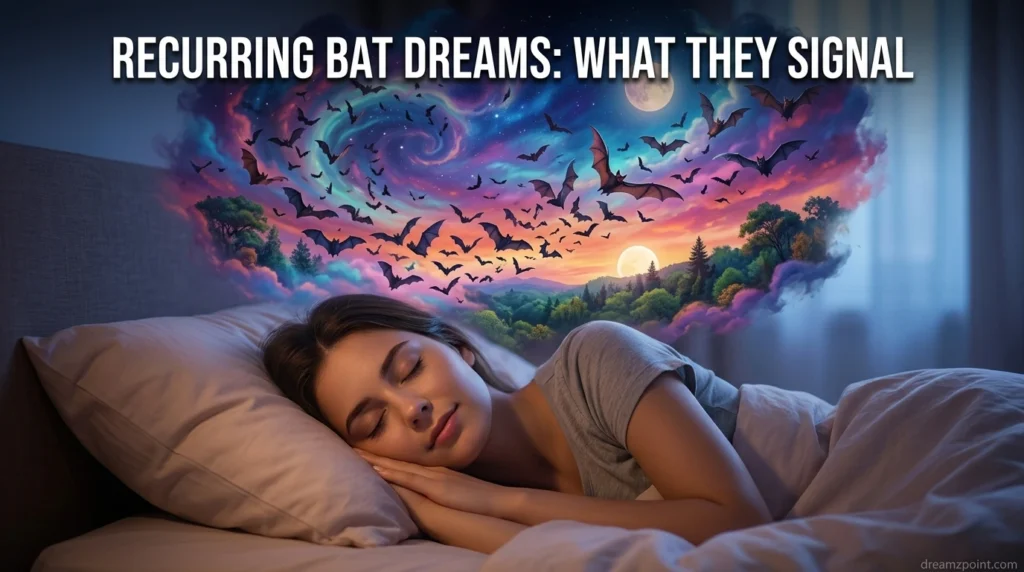
A single dream about a bat may simply reflect a passing emotion. But recurring dreams suggest something deeper.
When the same symbol appears repeatedly, it often means the underlying issue hasn’t been resolved.
Recurring bat dreams may indicate:
- Persistent grief that hasn’t been fully processed
- Emotional wounds that are still active
- Avoidance of a difficult truth
The repetition isn’t meant to distress it’s meant to draw attention.
Think of it as the mind’s way of saying, “This still matters.”
Paying attention to patterns when the dreams occur, what triggers them, how they evolve can provide valuable insight into what needs healing.
Different Scenarios and Their Interpretations
Not all bat dreams are the same. The context can significantly change their meaning.
Being Chased by a Bat
This may suggest avoidance. You’re trying to escape something emotional that continues to follow you.
A Bat Attacking You
This could represent overwhelming emotions or a sudden resurfacing of trauma.
Seeing a Bat from a Distance
This often indicates awareness without confrontation. You recognize something unresolved but haven’t engaged with it yet.
A Dead or Injured Bat
This may symbolize the end of a painful chapter or the beginning of healing.
Each scenario reflects a different stage in emotional processing.
Cultural and Psychological Interpretations

Culturally, bats are often associated with superstition, fear, or even death. However, psychological interpretations tend to focus more on internal transformation.
In psychology, dream symbols are rarely literal. A bat isn’t about the animal itself it’s about what it represents to the individual.
For someone who fears bats, the dream may reflect anxiety. For someone who sees bats as fascinating creatures, it may represent curiosity or change.
Cultural beliefs can influence how we interpret these dreams, but personal experience plays an even bigger role.
Understanding both perspectives allows for a more balanced interpretation.
How Suppressed Emotions Surface Symbolically
The mind doesn’t always communicate directly. Instead, it uses symbols to express complex emotions.
Bats are particularly effective symbols because they exist in liminal spaces between light and darkness, visibility and invisibility.
Suppressed emotions often behave the same way. They’re not entirely hidden, but they’re not fully visible either.
For example, someone who experienced a difficult breakup might not consciously feel grief anymore. Yet a bat appearing in dreams could signal lingering emotional residue.
These symbols act as bridges between conscious awareness and subconscious experience.
Recognizing them helps bring hidden emotions into the light.
Real-Life Stories of Bat Dreams and Healing
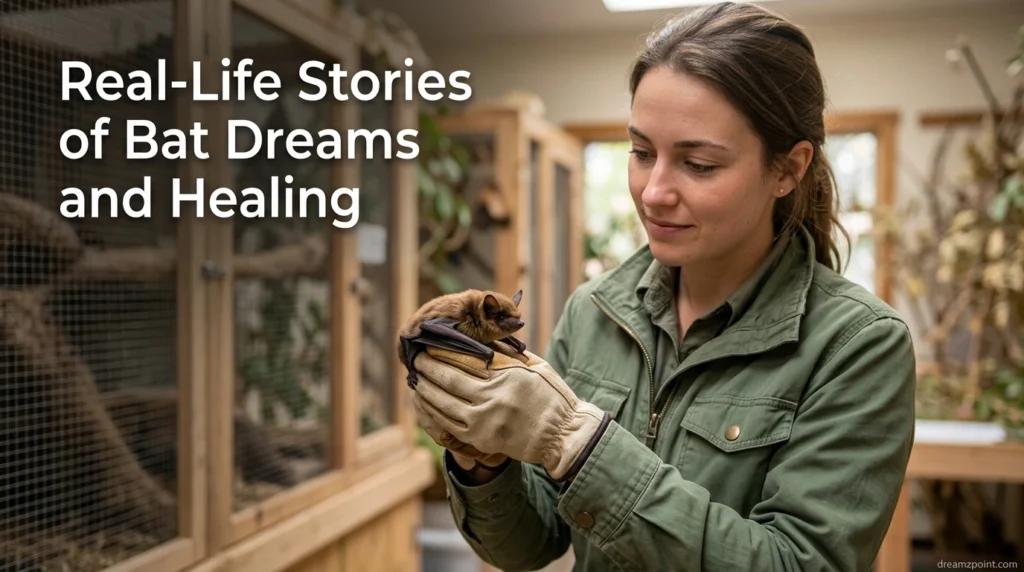
Consider someone who repeatedly dreamed of bats flying through their childhood home. At first, the dreams felt random. But over time, they realized the home represented a period of emotional neglect.
The bats weren’t threats they were reminders.
By acknowledging those feelings and exploring them in waking life, the dreams gradually changed. The bats became less aggressive, eventually disappearing altogether.
Another example involves someone who lost a loved one but never fully grieved. Years later, they began dreaming of bats circling above them.
Through reflection, they connected the dreams to unresolved sorrow. As they allowed themselves to mourn, the dreams shifted from chaotic to calm.
These stories illustrate how dreams can evolve as healing progresses.
Practical Steps to Reflect on These Dreams
Understanding a dream is one thing using it for growth is another.
Start by writing down the dream as soon as you wake up. Capture details: the setting, emotions, and actions.
Ask yourself:
- What was I feeling during the dream?
- What does the bat remind me of?
- Is there something in my life I’ve been avoiding?
Reflection doesn’t require immediate answers. Sometimes the act of asking is enough to begin the process.
You might also notice patterns over time. Certain themes or emotions may repeat, offering deeper insight.
Dreams are not puzzles to solve instantly they’re conversations to engage with.
Common Misunderstandings About Bat Dreams
Many people assume that dreaming of bats is inherently negative or a bad omen. This belief can create unnecessary fear.
In reality, these dreams are not predictions they’re reflections.
Another misconception is that such dreams must relate to something dramatic or traumatic. Sometimes, they simply point to subtle emotional imbalances.
It’s also easy to overanalyze. Not every bat dream carries deep meaning. Context matters.
The key is balance taking the dream seriously without letting it create anxiety.
Understanding removes fear and replaces it with curiosity.
Turning Insight Into Emotional Growth
Once you recognize what a bat dream might represent, the next step is action.
This doesn’t mean drastic change. It can be as simple as acknowledging a feeling you’ve been ignoring.
You might choose to:
- Talk to someone about unresolved emotions
- Reflect through journaling
- Revisit a memory with a new perspective
Growth comes from engagement, not avoidance.
The bat, in this sense, becomes a guide rather than a threat. It leads you toward something that needs attention.
Over time, this process can reduce emotional tension and bring a sense of clarity.
FAQs
1. Are dreams about bats always related to fear?
No, they can also symbolize transformation, intuition, or hidden emotions not just fear.
2. Can bat dreams indicate unresolved grief?
Yes, especially if the dream carries emotional weight or repeats over time.
3. Why do I keep dreaming about bats?
Recurring dreams often signal unresolved issues that your mind is trying to process.
4. Is dreaming of bats a bad omen?
No, these dreams are symbolic reflections of your inner state, not predictions of the future.
5. What if I feel calm in the dream?
Calmness may indicate that you’re beginning to process or accept underlying emotions.
6. Should I be worried about these dreams?
Not necessarily. They’re opportunities for insight, not reasons for alarm.
7. How can I stop these dreams?
Instead of stopping them, focus on understanding them. They often fade as emotional issues are resolved.
Conclusion
Dreams about bats may feel unsettling, but they carry meaningful insights beneath the surface. Rather than symbols of fear alone, they often point to unprocessed grief, hidden emotions, or unresolved trauma quietly shaping your inner world. By paying attention to these dreams your feelings within them, their patterns, and their context you gain a powerful tool for self-awareness. Instead of avoiding what they reveal, approaching them with curiosity can lead to healing and emotional clarity. In the end, the bat is not something to fear, but something to understand a quiet messenger guiding you toward what your mind is ready to face.
